
Last updated September 20, 2026
Free on-site gate assessment - hinges, posts, and your LiftMaster or Nice gate operator checked before anything is quoted
The assessment is free and the quote is the invoice.
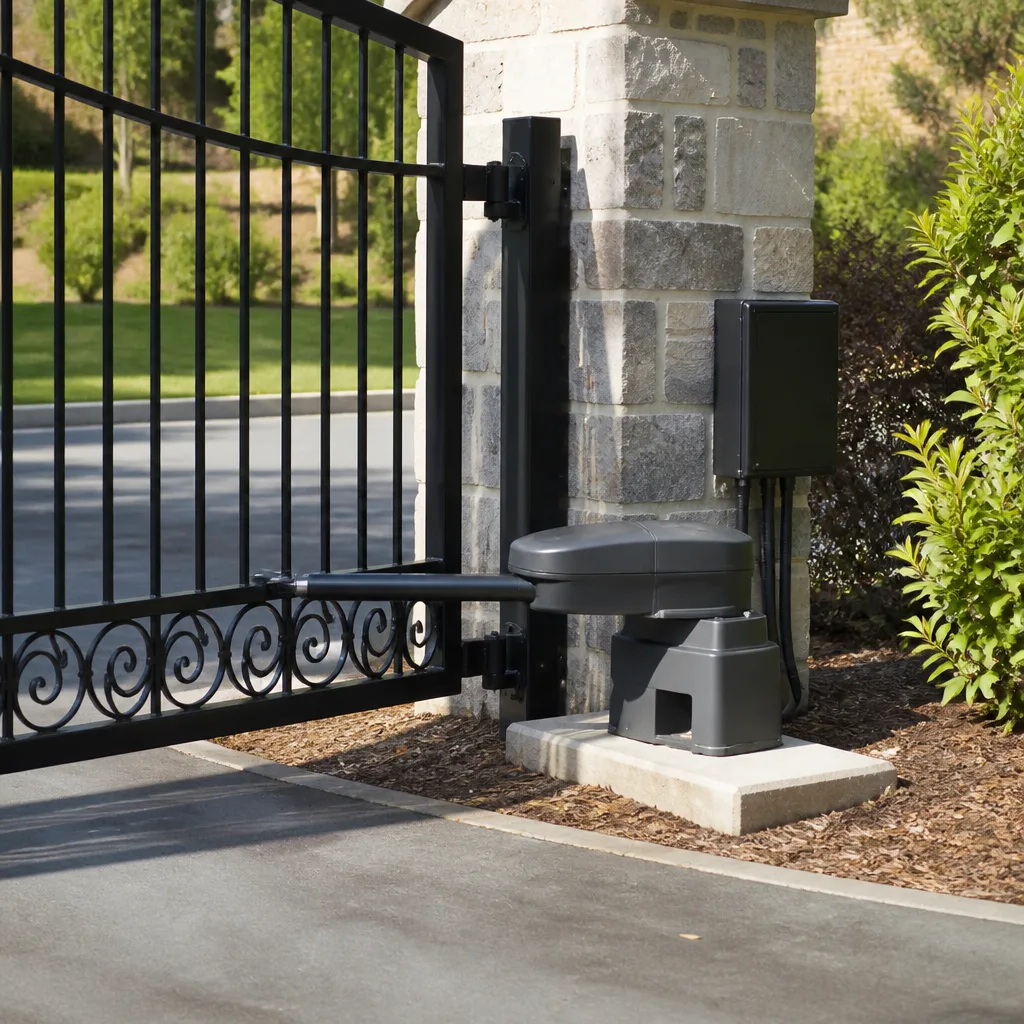
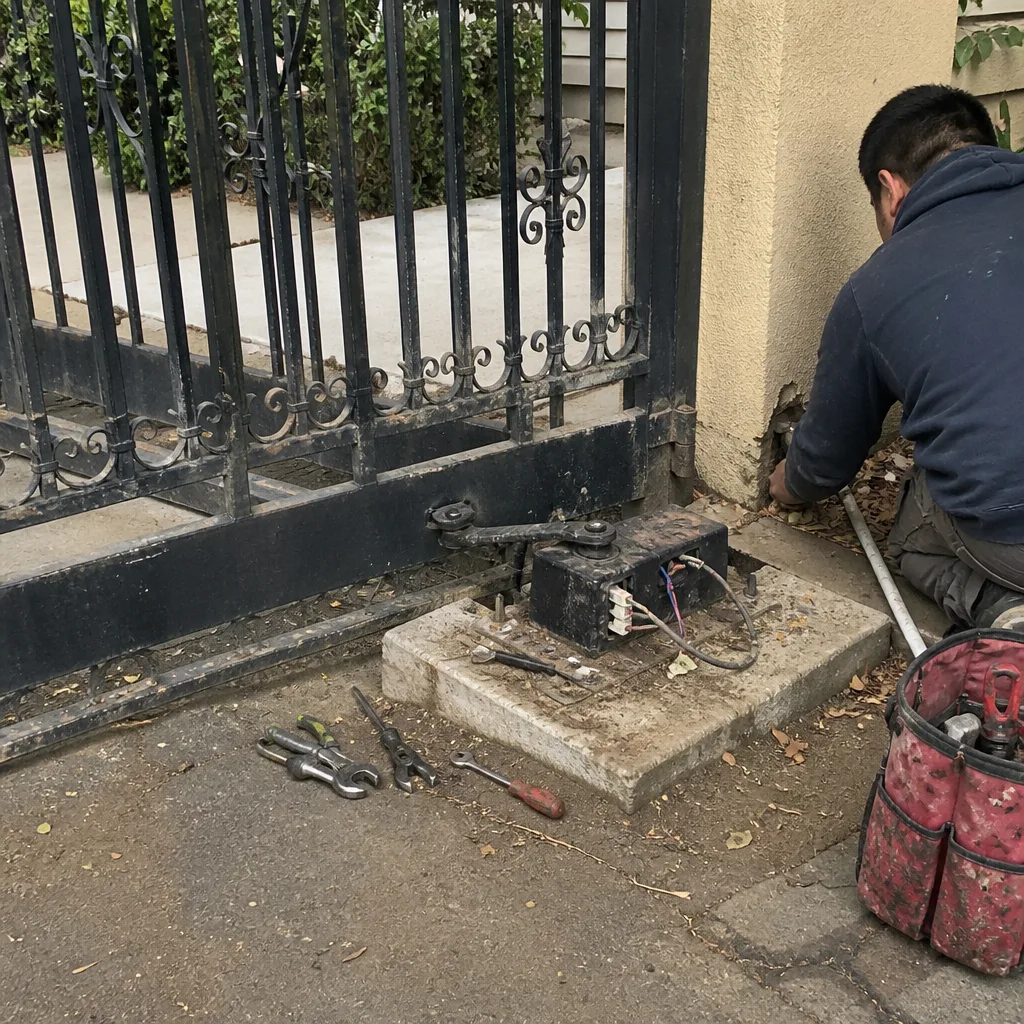 Before
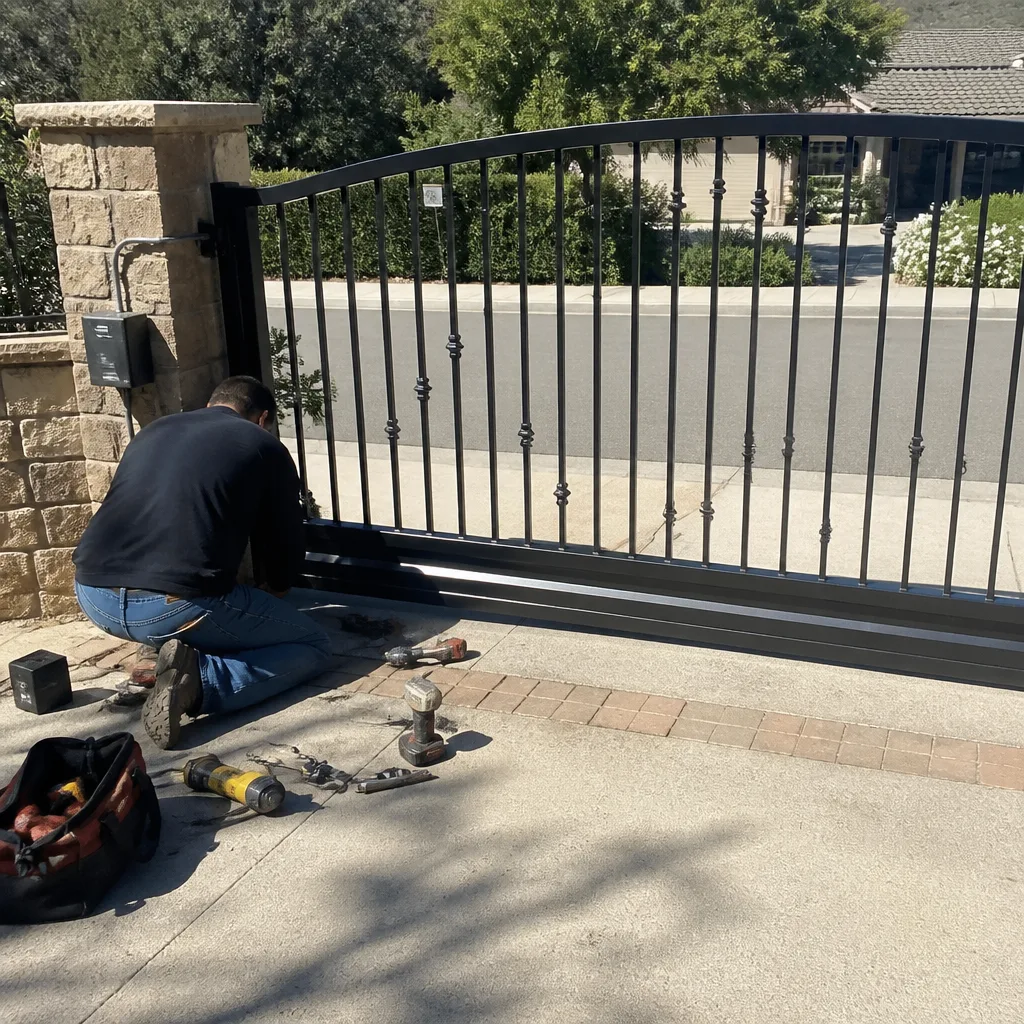 After
After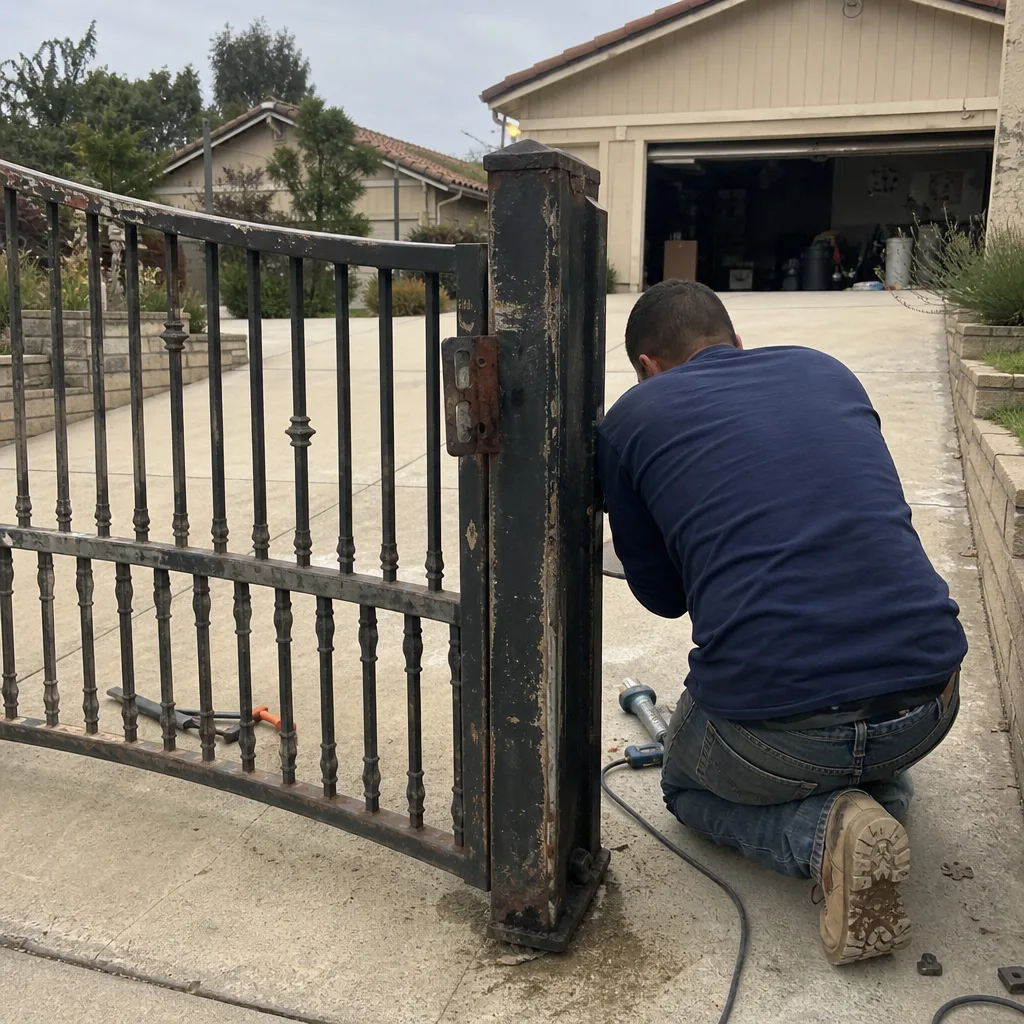 Before
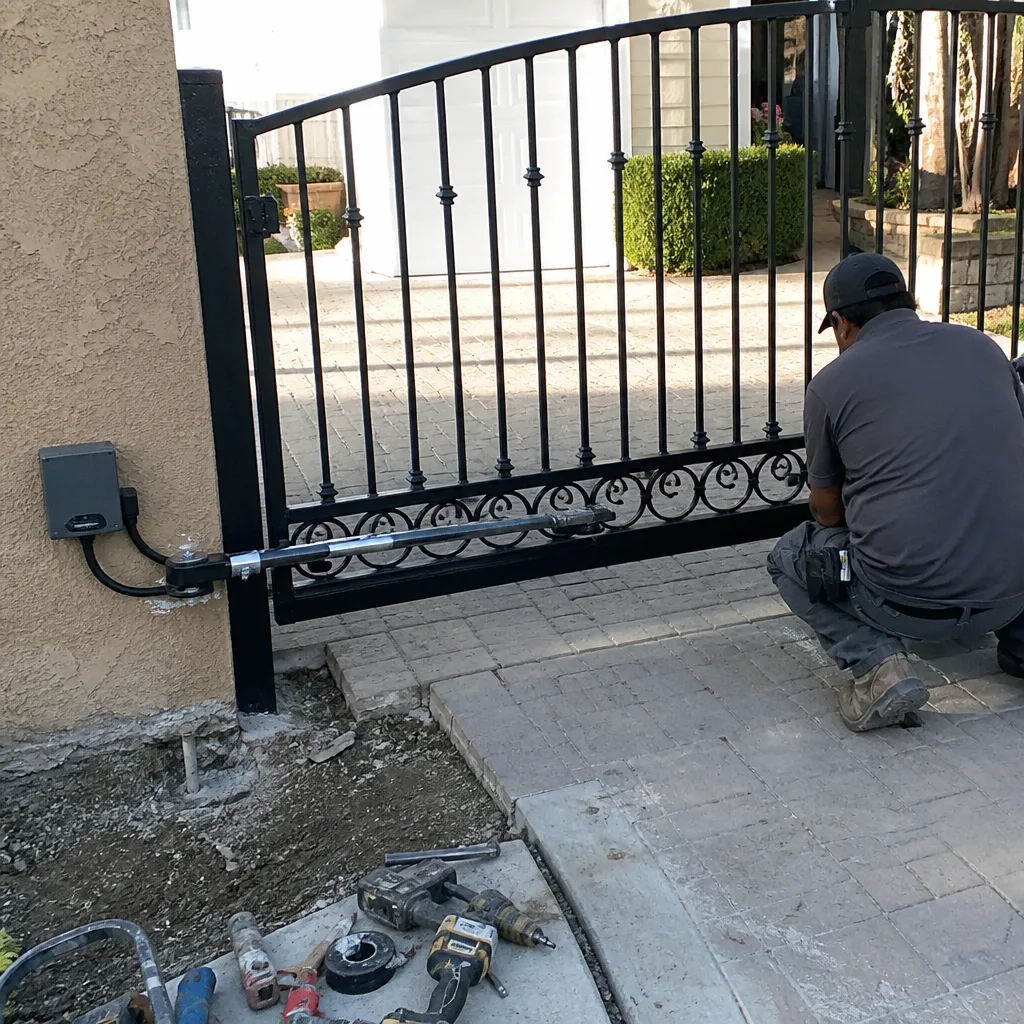 After
After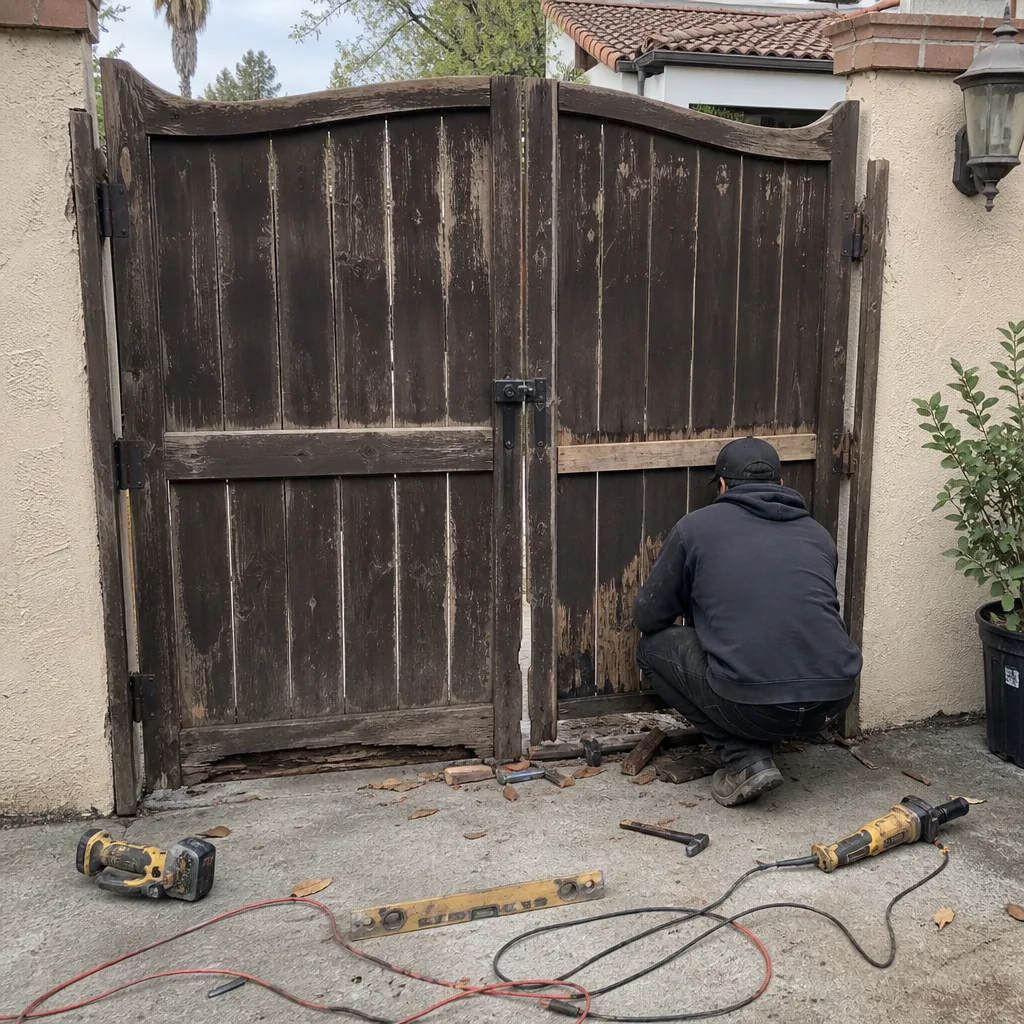 Before
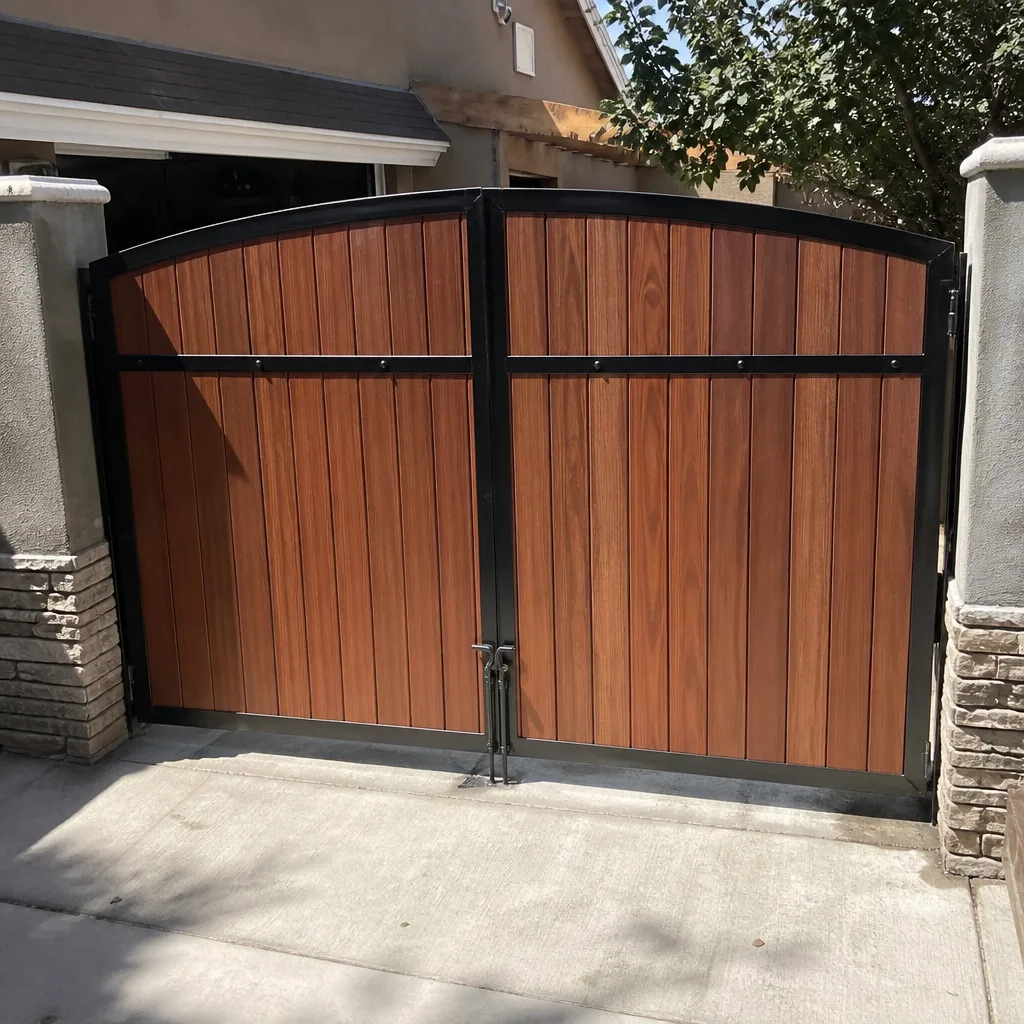 After
AfterSeasonal Gate Repair Care for Camarillo: Year-Round Homeowner’s Guide
Camarillo’s October and November Santa Ana winds are known fire risks, but for anyone with an automatic driveway gate, they’re something else too: a structural test. Sustained 40 mph gusts push against a 400-pound steel leaf and transfer that force straight into the hinge posts, actuator arm, and motor gearbox. If your gate started autumn at even marginal spec, one Santa Ana season can compress a normal six-year wear cycle into eight weeks. This guide maps Camarillo’s four distinct stress periods to the specific gate components that fail during each one, so you can inspect, lubricate, and budget on a rotation that actually matches the weather you live in.
Quick Answer
Seasonal gate care in Camarillo means four inspections per year, each focused on a different failure mode: corrosion checks during the winter marine-layer months, seal and hinge binding checks during the spring dry-out, battery and board thermal checks during summer heat, and wind-load and debris checks during the Santa Ana fall. The component most likely to fail changes with each season, and most Camarillo gate repairs we perform could have been caught one season earlier with a ten-minute visual inspection and a voltage reading.
Table of Contents
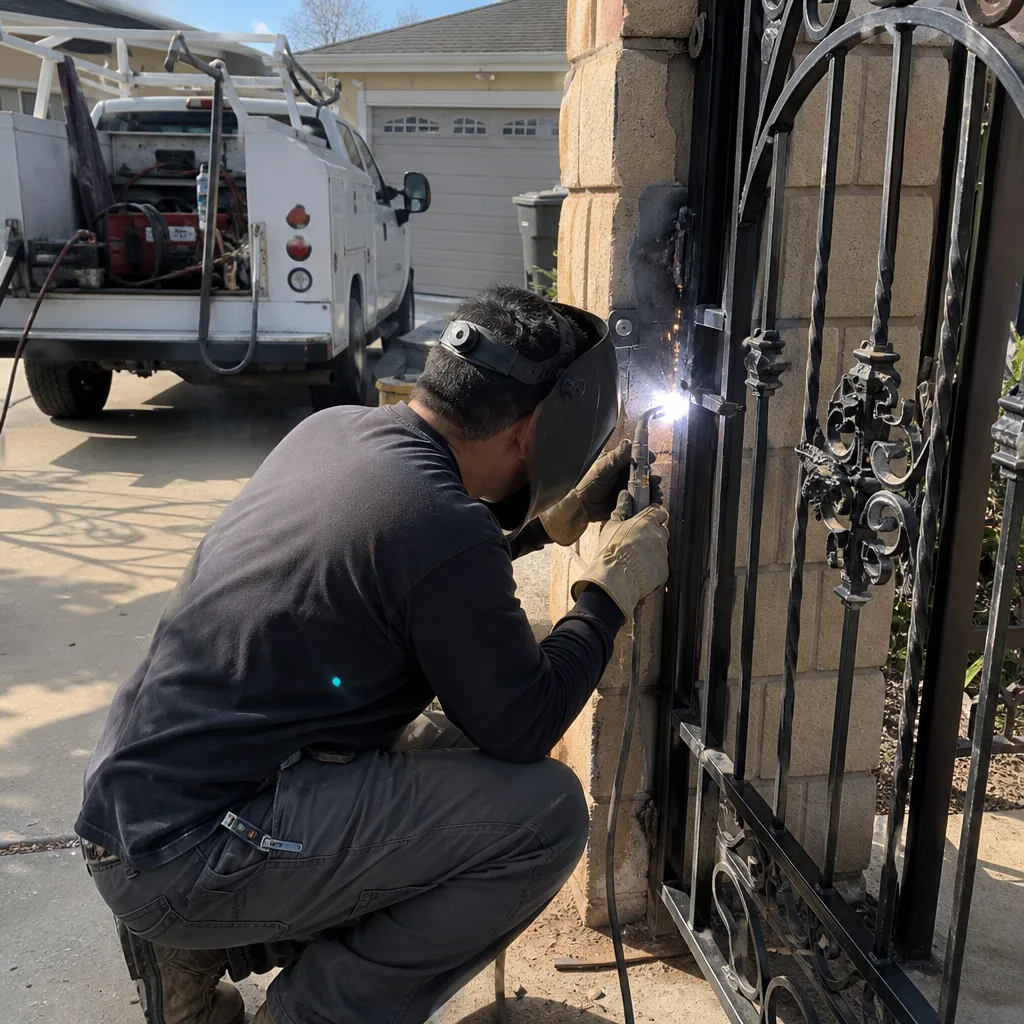
- The Four Camarillo Stress Periods and What They Break
- Winter: Marine-Layer Corrosion and the Photo-Eye Problem
- Spring: Seal Cracking, Hinge Binding, and the Dry-Out Window
- Summer: Board Thermal Stress and Solar Battery Overcharge
- Fall: Santa Ana Wind Loading and Debris Ingestion
- Lubrication by Gate Type: What, When, and When to Stop
- The One-Page Seasonal Log: What to Record Each Quarter
- Common Mistakes to Avoid
- When to Call a Professional
- Frequently Asked Questions
- The Bottom Line
BeforeAfterThe Four Camarillo Stress Periods and What They Break
Camarillo’s climate doesn’t follow a single seasonal arc. It cycles through four distinct weather regimes, and each one attacks gate hardware differently. The marine layer rolls in from the coast during winter and hangs for weeks, keeping relative humidity above 70% and depositing salt-tinged condensation on every exposed metal surface. Spring burns that layer off fast, and the rapid dry-out causes rubber seals to shrink and wooden gate panels to release moisture unevenly, which translates into hinge binding. Summer delivers weeks of direct sun that heat control boards past their thermal comfort zone and push solar charge controllers into overcharge territory. And fall brings the Santa Ana winds, which load the gate face with lateral force and carry fine dust and leaf debris into every moving part.
Here is the Camarillo stress-period map, with the component most likely to fail in each window:
- Winter (December-February, marine layer): Photo-eye corrosion, terminal strip oxidation, hinge pin rust. The failure mode is electrical, not mechanical.
- Spring (March-May, dry-out): Rubber seal cracking, hinge binding from panel shrinkage, chain tension drift on slide gates. The failure mode is mechanical binding.
- Summer (June-August, heat): Control board capacitor aging, solar battery overcharge swelling, motor thermal cutoff trips. The failure mode is thermal.
- Fall (September-November, Santa Ana): Hinge post loosening, actuator arm bending, debris ingestion into rack teeth and limit switches. The failure mode is structural and accumulative.
What this means for a Camarillo homeowner is simple: if you only service your gate once a year, you’re always fixing the last season’s damage while the current season’s damage is already underway. A quarterly rotation, each visit focused on one specific task, takes less total time than a single annual overhaul and catches failures before they take the gate out of service. We’ve rebuilt enough Camarillo gate repair jobs to see the same pattern: the collapsed hinge in October had a visible hairline crack in April.
Winter: Marine-Layer Corrosion and the Photo-Eye Problem
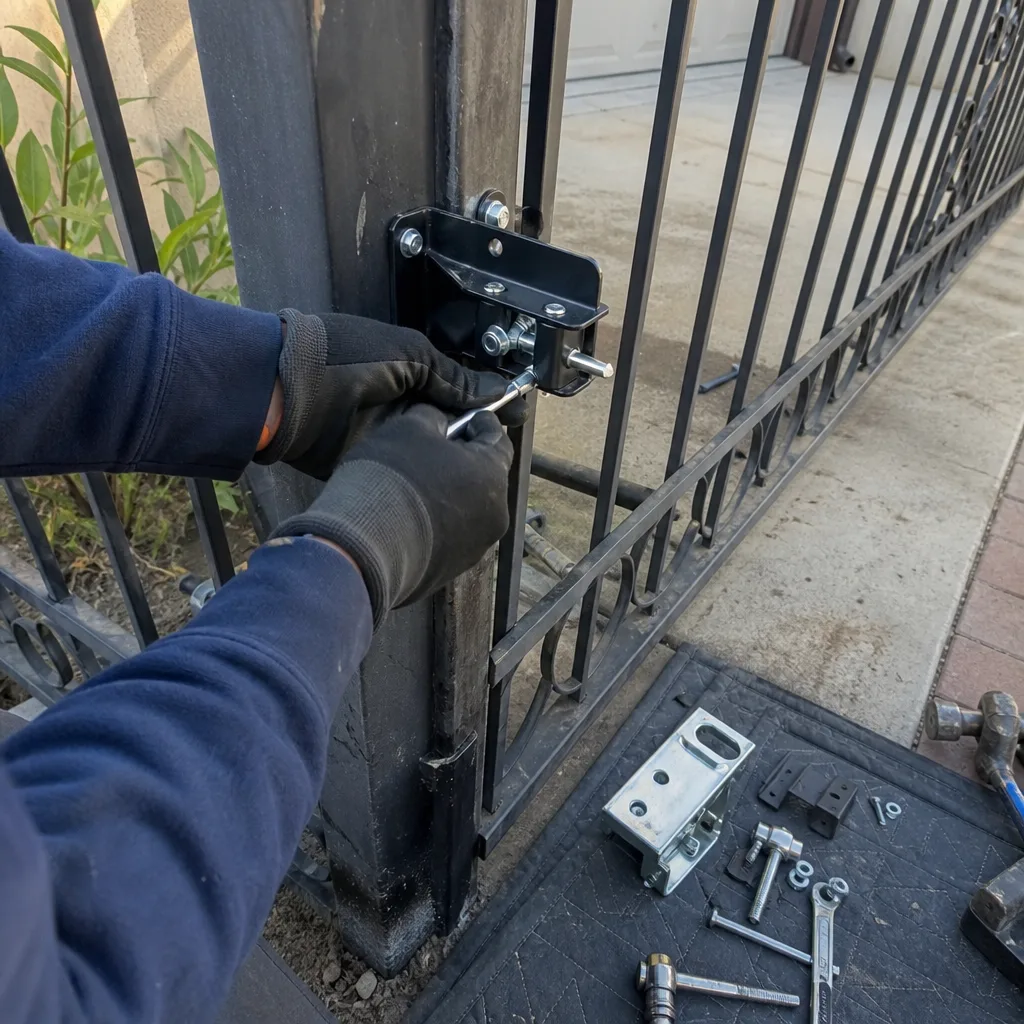
The December-to-February window in Camarillo is the slowest season for obvious gate failures, which makes it the most dangerous for neglect. Moisture works quietly. The marine layer sits on your gate hardware for 14 hours at a time, and because Camarillo’s winter temperatures rarely dip below 45°F, the water never evaporates cleanly. It condenses, lingers, and migrates into low-voltage connections. The photo-eye (the infrared beam that stops the gate when something crosses the path) is the classic winter casualty, because its housing is a small plastic box positioned near the ground where condensation pools and splashes from sprinklers concentrate.
Winter inspection checklist:
- Wipe the photo-eye lenses with a dry microfiber cloth and check the housing for internal fogging. If you see condensation inside the lens, the seal on the housing has failed and the unit needs replacement before the beam starts false-triggering.
- Open the control box and look at the terminal strip. Green or white powdery residue on the screws is corrosion beginning. Tighten each terminal screw a quarter turn by hand if the circuit is de-energized, and photograph the board before you close the lid.
- Run the gate through a full open-close cycle and watch for hesitation. A gate that slows noticeably mid-cycle in winter is usually fighting increased resistance from rusted hinge pins, not a failing motor. Lubricate the hinges now, before the rust scores the pin surface.
- Check the ground wire connection at the gate post. Marine-layer corrosion is worst at the ground bond, and a corroded ground is the leading cause of intermittent operator faults in coastal Camarillo neighborhoods.
The physical sign that the winter window has arrived: morning dew on the gate face that hasn’t dried by 10:00 AM, for three consecutive days. That’s the moisture load that starts migrating into connections. Once you see that, do the electrical inspection that weekend. If you’re not comfortable opening a control board while the system is live, that’s the right moment to call for a service visit rather than defer it to spring; see our DIY vs Professional Gate Repair: The Camarillo Homeowner’s Decision Guide to decide which path fits your situation.
Spring: Seal Cracking, Hinge Binding, and the Dry-Out Window
Camarillo’s spring arrives fast. In March and April, the marine layer burns off earlier each day, daytime temperatures swing upward, and the relative humidity drops from 70% to 25% within a few weeks. Every rubber component on your gate, from the edge seals on a slide gate to the weather boots on a swing gate actuator arm, loses moisture during this transition. The sign that the spring window has opened is simple: look at the rubber seal at the bottom of the gate leaf. If it’s starting to show fine surface cracks (hairline fissures in the rubber face, like cracked desert soil), the dry-out is underway.
Spring inspection checklist:
- Inspect every rubber seal on the gate leaf, post, and actuator. Surface cracking is the early stage. Deep cracks that expose the seal’s internal webbing mean the seal has lost its compression ability and needs replacement before summer, when it will fully split under heat.
- Open the gate manually (disengage the operator first) and swing or slide it through its full travel. Note where it binds. Spring hinge binding, especially on wooden gates, is caused by the panel shrinking unevenly as it dries. If the gate rubs at the latch post but not at the hinge post, the panel has warped slightly; you can usually correct this with hinge shims, but the correction should be recorded in the seasonal log so a future technician knows it was made.
- Check chain or belt tension on slide gates. The spring dry-out changes the gate’s rolling resistance, and a chain that was properly tensioned in winter may now be too loose, which causes slapping and premature sprocket wear.
- Lubricate hinge pins and roller bearings now, not in summer. The lubricant penetrates better when the metal is warming up but not yet heat-soaked.
Spring is also the right time to replace a degraded gate battery, not summer, because summer heat accelerates battery failure once the internal plates have already started sulfating. If your gate operator battery is more than three years old and the gate ran slow one morning during the winter, replacing it in April is cheaper than replacing it in July as part of an emergency gate motor and opener service call.
Summer: Board Thermal Stress and Solar Battery Overcharge
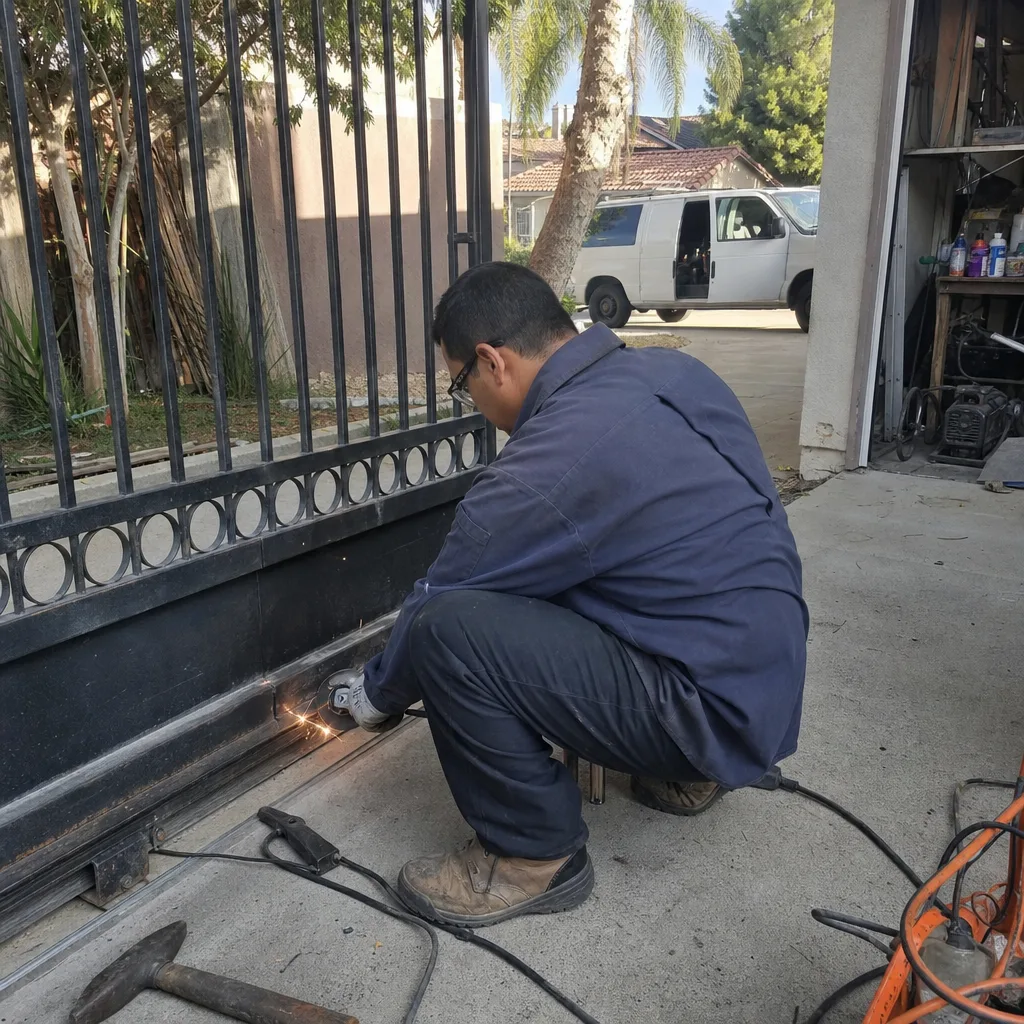
Summer in Camarillo pushes every electrical component in your gate system to its thermal limit. A control board mounted inside a metal enclosure on a south-facing post can reach 130°F by mid-afternoon in July. That’s within the operating specification for most boards (LiftMaster, FAAC, and BFT boards are generally rated to 158°F), but sustained heat degrades electrolytic capacitors faster than any other environmental factor. A capacitor that operated fine for five years can fail in one Camarillo summer once its electrolyte has begun drying out.
Solar-powered gate operators have a separate summer problem: overcharge. In June and July, Camarillo’s solar irradiance peaks, the days are longest, and the panel’s output exceeds the battery’s absorption capacity for several hours per day. A charge controller that’s working correctly shunts the excess current as heat. A charge controller that’s marginal can push the battery to 15 volts or higher, which causes gassing, plate corrosion, and swelling. The physical sign to watch for: a battery case that’s bulging at the sides or warm to the touch at 9:00 PM, hours after charging has stopped.
Summer inspection checklist:
- Measure the battery resting voltage at sunset on a day when the gate has cycled normally. A healthy 12-volt battery should read between 12.6 and 12.9 volts. A reading below 12.4 volts after a full solar day means the battery is losing capacity and should be replaced before the short winter days arrive.
- Open the control box in the morning (before the sun hits it) and photograph the board. Look for brown discoloration around the capacitors, bulging capacitor tops, or any trace of melted conformal coating. These are the early signs of thermal aging.
- Feel the motor housing after ten consecutive open-close cycles on a hot afternoon. Warm is normal. Too hot to hold your hand against for five seconds means the motor is drawing more current than it should, usually because a load has increased somewhere (a hinge binding, a wheel failing, a chain over-tightened in spring).
- If your operator has a thermal cutoff, note the ambient temperature at the operator when it trips. Thermal cutoff trips in summer are a symptom, not the problem. The gate is working harder than it should be, and the motor is protecting itself. Find the increased load before you replace a motor that was only doing its job.
The summer window opens when daytime highs in Camarillo sit above 85°F for a full week. That’s the trigger to do the battery voltage check and the board inspection. Doing it on the first hot day, not the thirtieth, gives you the trend line you need for the seasonal log.
Fall: Santa Ana Wind Loading and Debris Ingestion
Santa Ana winds are the most aggressive seasonal stress Camarillo gate hardware endures. A 40 mph sustained gust against a single swing gate leaf that measures eight feet wide and six feet tall applies roughly 200 pounds of lateral force. If the gate faces the prevailing east-northeast wind direction, that force arrives as a continuous push-and-release cycle, hour after hour, for days. Hinge posts take the load first. Actuator arms take it second. Loose hinge bolts that survived the summer will be pulled out of true by late October, and an actuator arm that was already marginal will bend at the clevis pin.
Debris ingestion is the second fall failure mode. Santa Ana winds carry fine dust, eucalyptus leaves, and twigs directly into slide gate tracks, rack teeth, chain links, and limit switch housings. The damage is accumulative. One leaf in the rack teeth is a nuisance. A week of wind-driven leaf and dust accumulation becomes a grinding paste that wears the pinion gear and the rack face together.
Fall inspection checklist:
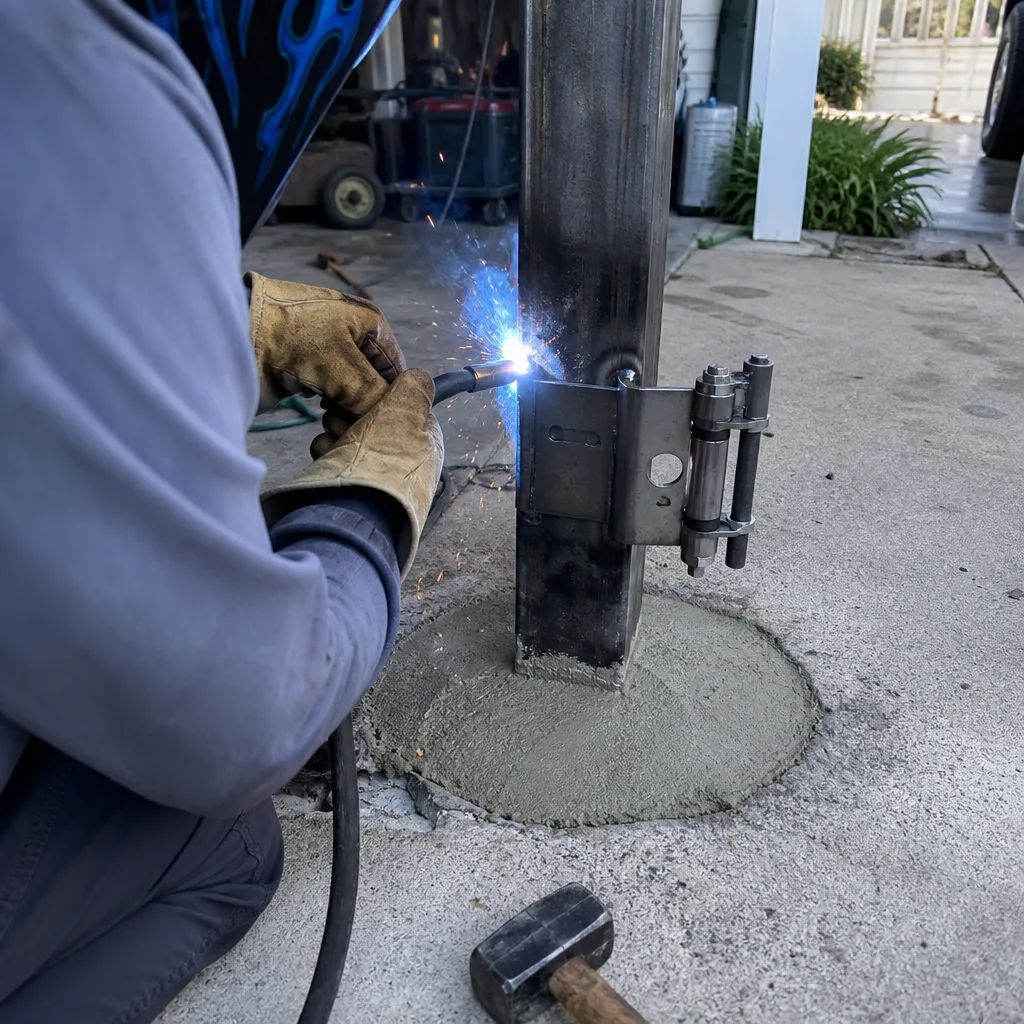
- Stand at the hinge post and push the gate leaf laterally by hand, parallel to the post. Any movement at all means the hinge post bolts or the post’s concrete footing has loosened. This is the single most important fall check, because a loose hinge post under Santa Ana load will crack the weld where the hinge ear meets the post, and that repair is a gate installation job rather than a hinge adjustment.
- Inspect the actuator arm at the clevis pin. Look for a wear ring around the pin hole (the hole has elongated) or any deformation in the arm itself. If the arm is bent even five degrees, replace it before the wind season peaks. A bent arm under load transfers sideways force into the motor gearbox.
- Clear the entire slide gate track or rack. Use a stiff brush and compressed air to remove dust and debris from the rack teeth, then run the gate and listen. A clean rack should be nearly silent in operation. Grinding or crunching means debris has already worked into the pinion gear, and the gear should be inspected by someone who can remove the cover without damaging the gear.
- Check all gate lock hardware. Santa Ana winds rattle un-locked gates, but wind also tests lock alignment. A gate that shifts even an eighth of an inch during the first wind event will no longer align its lock striker with the post plate, which turns a secure gate into one that can be forced open by hand.
The fall window opens with the first National Weather Service red-flag warning for the Camarillo area. That’s the physical indicator, not a calendar date. When the red-flag warning arrives, the hardware checks above should already be done.
Lubrication by Gate Type: What, When, and When to Stop
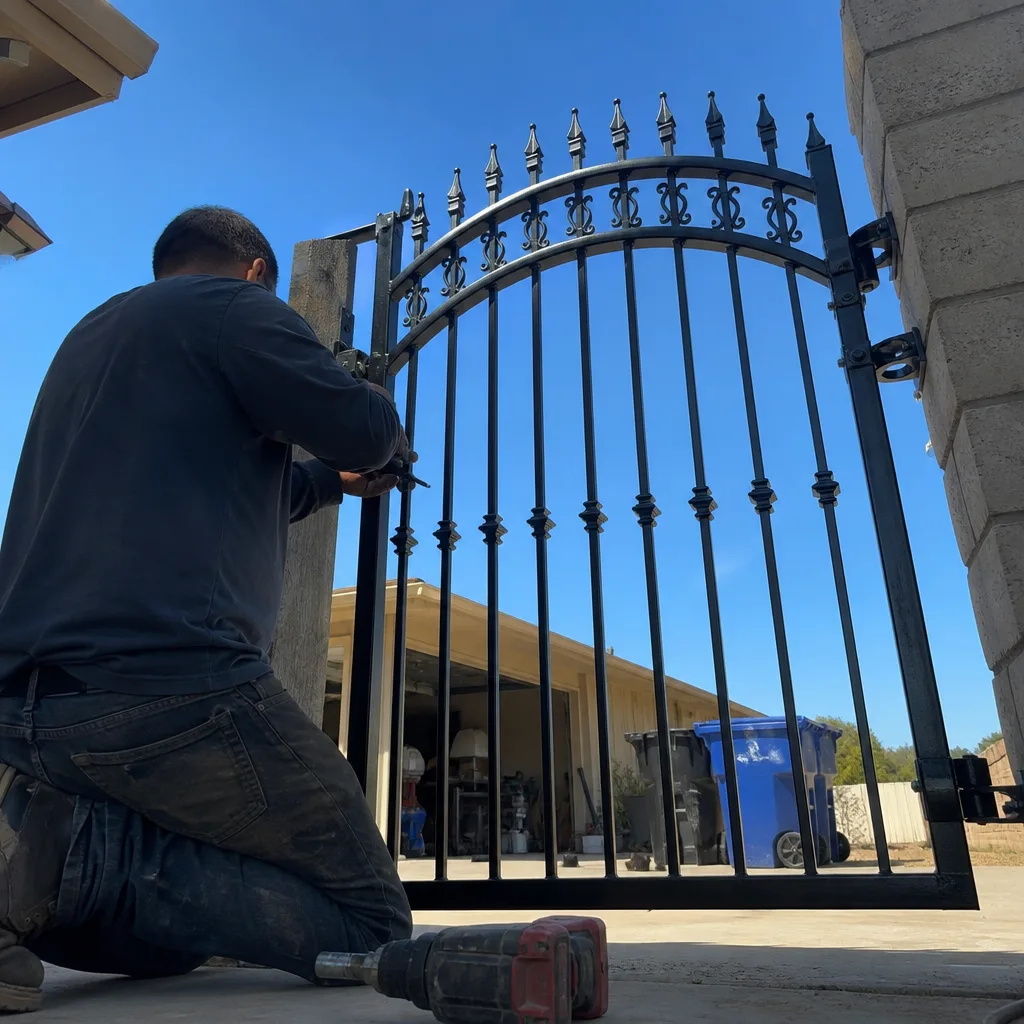
Lubrication is the most misunderstood maintenance task in gate care, and Camarillo’s coastal air makes the mistake patterns predictable. The right product, applied to the right component, at the right interval, extends hardware life. The wrong product or the right product applied too often creates a sticky film that traps airborne dust and salt, accelerates wear, and is often harder to correct than the wear it was meant to prevent.
The lubrication rules by gate type:
- Swing gate hinge pins: White lithium grease or a marine-grade grease (important in Camarillo because standard grease washes out faster in salt-tinged marine-layer condensation). Apply twice per year, once in spring and once in fall, to the pin surface only. Wipe off any excess after application. Excess grease is a dust magnet in fall Santa Ana winds.
- Slide gate rollers and track: Use a dry PTFE-based spray on the rollers, nothing on the track. The track should be clean and dry. Any oil or grease on a slide gate track will combine with Santa Ana dust into an abrasive paste within days. If the rollers are sealed, they need no lubrication. If they’re unsealed, one light PTFE application per year is enough.
- Chain drives: Motorcycle chain lube or a specific gate-chain lubricant, applied lightly once per year in fall. Over-lubricating a chain produces the same dust-and-lube paste problem, and it hides chain stretch. A chain that’s wet with lubricant cannot be inspected for stretch because the lube masks the elongation.
- Actuator arms and joints: Nothing. Camarillo’s dust load makes any lubricant on exposed actuator joints a liability. The joints are sealed from the factory. If they’re squeaking, the joint is worn and should be replaced, not lubricated.
The evidence of over-lubrication is a thick dark paste around the hinge pin, chain, or roller. It looks like dirty grease, and it tells you the lubricant has already trapped enough dust to become a grinding compound. When we see that on a Camarillo gate, the correction is to clean the component back to bare metal, inspect for wear, and re-lubricate with the right product at the right amount. Occasionally the over-lubrication has already scored the pin or chain, and the component needs replacement rather than relubrication.
The One-Page Seasonal Log: What to Record Each Quarter
Most Camarillo homeowners call a gate repair company when something fails, and the technician arrives with no history. That means every visit starts from zero, and the same diagnostic steps get paid for again because no one recorded what was found last time. A one-page seasonal log changes that. It costs nothing to keep, it takes five minutes per quarter to update, and it turns a three-year-old gate problem from a mystery into a trend line.
The log needs four entries per year, one for each stress period. Here’s what to record each quarter:
- Date and weather context: One line. “Spring entry, March 18, first week of dry-out. Hinge visual check done.”
- Battery resting voltage (if applicable): One number. This is the single most valuable trend line on the page. A battery that reads 12.8 in winter, 12.7 in spring, 12.6 in summer, and 12.4 in fall is telling you it’s losing capacity month by month. That’s the signal to replace before winter, not after the gate fails on a cold December morning.
- What you inspected and what you found: Be specific, not judgmental. “Photo-eye lenses clear, no internal fogging.” “Hinge pin on lower hinge has light surface rust, lubricated.” The value is in the specifics, because they let a technician compare quarter to quarter.
- What you adjusted or replaced: Part numbers if available. “Replaced bottom edge seal, 8-foot section out of 10-foot seal. Material: rubber with internal webbing.” A technician reading this in year three knows the seal was already replaced once and can see if the failure interval is shortening.
- What you’re watching: One or two sentences. “Gate slowed slightly mid-cycle in winter. Will monitor in spring. If slowdown persists, will call for service.” This line turns the log from a record into a plan.
Keep the log in a physical sleeve near the gate operator or as a digital note file that everyone in the household can access. When a technician does arrive, hand over the log. A one-page document with two years of history routinely saves more time and money than any single inspection, because it means the technician starts from what you already know rather than paying to rediscover it. Vance Gate Repair’s standard visits include a written record of what was found, what was set, and what was installed, and a homeowner who keeps their own log gives us exactly the trend line we need to fix something once instead of twice. For more guides & resources on maintaining your gate system, visit our blog.
Common Mistakes to Avoid
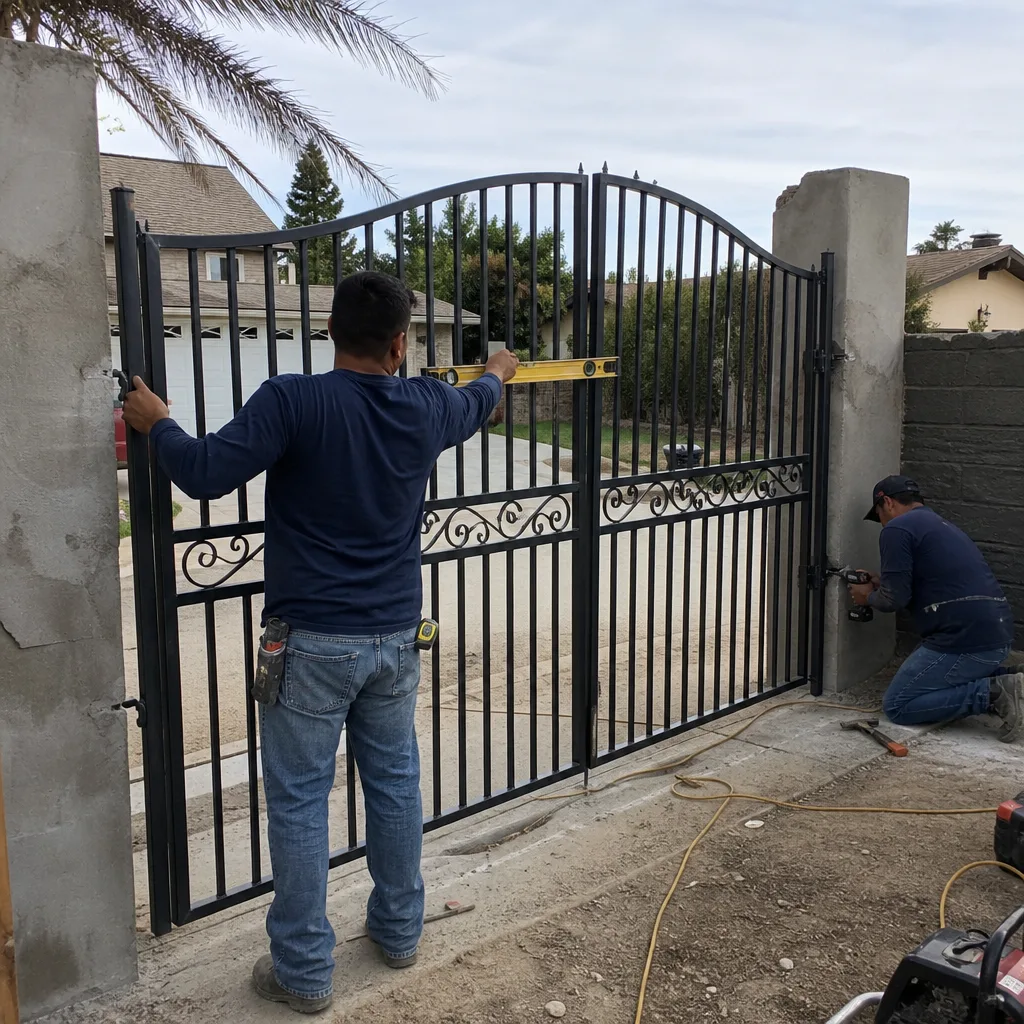
- Servicing the gate once a year and calling it seasonal maintenance. Camarillo’s four stress periods each demand a different inspection focus. But an annual check done in fall misses the corrosion that started in winter, the seals that cracked in spring, and the battery that cooked in summer. By the time the annual visit happens, all four problems are presenting at once.
- Using WD-40 as gate lubricant. WD-40 is a water displacer, not a lubricant. It penetrates, cleans, and then evaporates, leaving hardware drier than before. In Camarillo’s marine-layer winter, treating hinges and chains with WD-40 actually accelerates corrosion because the protective film is gone within days.
- Waiting for the gate to fail before recording anything. The most valuable data point in gate maintenance is the resting battery voltage, taken quarterly when the gate is still working fine. By the time the gate fails, the battery is already gone and you’ve lost the trend line that would have told you when it started going.
- Ignoring a hinge post that moves when you push the gate by hand. A loose hinge post always gets worse, never better, and Santa Ana winds are the force that finishes the job. The same post that wobbles an eighth of an inch in August will be pulled an inch out of true by late October, and the repair costs ten times as much.
- Over-lubricating because “more is better.” In Camarillo’s dust-heavy fall, a chain or hinge that’s wet with lubricant becomes a grinding surface within weeks. The right amount of lubricant is a thin film. If you can see it pooling or dripping, you’ve used too much and should wipe the excess off.
- Treating the photo-eye as a set-and-forget component. Photo-eyes are the most weather-exposed electronic part on any Camarillo gate, and marine-layer condensation inside the housing is a common source of intermittent false-triggering that gets misdiagnosed as a board failure. A photo-eye inspection takes 30 seconds each season.
When to Call a Professional
Some seasonal checks are straightforward for a homeowner: wiping a photo-eye lens, clearing a slide gate track, recording a battery voltage. Others cross into territory where a misdiagnosis can cost more than a service visit. If your gate slows or stops mid-cycle and the slowdown persists across multiple seasons, if the hinge post moves under hand pressure, if the control board shows any sign of thermal discoloration, or if the gate’s operator periodically trips without an obvious cause, call a professional before the component involved fails completely. A technician with a meter and a torque wrench will find the cause in minutes, where a homeowner with a visual-only inspection can chase symptoms for weeks. Vance Gate Repair Camarillo offers free estimates in Camarillo. Call (805) 516-0855 and we’ll give you a written price before any work starts. You’ll find more about what a service visit covers on the Vance Gate Repair Camarillo home page.
Frequently Asked Questions
Four times per year, once for each of Camarillo’s four stress periods: winter marine-layer corrosion, spring dry-out seal checks, summer heat and battery checks, and fall wind-load checks. Each inspection is short and focused, but skipping any of the four means the specific failure mode of that season goes unexamined until it causes a breakdown. Call (805) 516-0855 if you want a seasonal inspection backup on file.
Fall, specifically the Santa Ana window from late September through November. Sustained 40 mph winds apply lateral force to the hinge posts and actuator arms that no other season produces, and the wind-driven dust and debris load turns small clearances into grinding surfaces. But winter is a close second for electrical components, because marine-layer corrosion works invisibly for weeks before it causes a failure.
Yes. Solar operators are the most seasonally sensitive, because Camarillo’s short winter days reduce solar input and its long summer days can cause battery overcharge. The critical maintenance task is quarterly resting battery voltage: 12.6 to 12.9 volts at sunset on a normal cycling day is healthy, below 12.4 volts means capacity is declining, and above 13.6 volts indicates a charge controller problem. Hold the battery above the 12.4-volt floor before winter arrives.
White lithium grease or marine-grade grease on swing gate hinge pins, a dry PTFE-based spray on slide gate rollers, and nothing on the track itself. Camarillo’s marine-layer winter is salted enough that standard grease washes out and needs replacement twice a year, and anything oil-based applied before Santa Ana season will combine with dust and create an abrasive paste.
Not on a fixed schedule. Replace the battery when the resting voltage trend line shows it dropping below 12.4 volts, or when the battery is more than three years old and shows any sign of slowed operation during winter. Replacing a battery simply because the calendar says October can waste a good battery, but recording the voltage every quarter gives you the data to know when replacement is actually warranted.
Vance Gate Repair services nine major gate-automation brands, including LiftMaster, FAAC, BFT, and Linear, because our background is in commercial access-control systems where the existing hardware on the property drives the service decision, not a showroom preference. Whatever motor is already on your Camarillo gate, we can work on it, and we document every visit with a photo record of what was found, what was set, and what was installed.
The Bottom Line
Camarillo gate care isn’t one annual event; it’s four seasonal checks, each aimed at the specific failure mode that season produces. Winter marine-layer corrosion attacks electrical connections and photo-eyes. Spring dry-out cracks seals and binds hinges. Summer heat stresses control boards and overcharges solar batteries. Fall Santa Ana winds test hinge posts, actuator arms, and track cleanliness. A quarterly rotation, with a one-page log recording what you found each season, catches failures while they’re still cheap to address. And when something exceeds what a visual inspection can diagnose, call a professional who shows up with a meter and leaves a written record. For a deeper look at local repair strategies, read The Complete Guide to Gate Repair in Camarillo. Gate care in Camarillo is like every other trade: the maintenance done in the right season costs a fraction of the repair done after the failure.
Written by Adrian Vance, Owner at Vance Gate Repair Camarillo, serving Camarillo since 2014.